Ground Anchor Security Bolts: The Weak Point Explained
Ground anchor bolts matter less for their grade than for whether a thief can reach them. Most anchors leave their fixing bolts visible around the base, so they can be worked on at any time, including while your bike is out. The strongest arrangement is one where the bolts are covered whenever the bike is locked in.
When riders research ground anchors, the conversation usually centres on the bolts: what type, what grade, what head. That's understandable, but it misses the more important question: when are those bolts exposed, and who can reach them? This guide covers the main fixing types, how they're attacked, what to use for your floor, and how TufLuck approaches the problem.
Types of ground anchor bolts and fixings
| Fixing type | How it works | Pros | Cons |
|---|---|---|---|
| Expansion (wedge or sleeve) anchors | A bolt expands a sleeve or wedge inside a drilled hole | Quick to fit, removable | Needs sound concrete; holding depends on correct hole size and depth |
| Chemical (resin) anchors | A threaded rod or anchor is bonded into the hole with resin | Very strong in good concrete | Effectively permanent; removal usually means grinding out |
| Security or shear-head bolts | Tamper-resistant heads, or heads that snap off once tightened | Harder to undo with normal tools | Still exposed if the anchor leaves them visible; hard for you to remove too |
| Fixings covered by the unit | Bolts sit under the product when it's in use | Can't be attacked while the bike is locked in | Depends on the design; the unit must be lifted to reach them |
The flaw in the standard model
A ground anchor gives the bike a fixed point. Its strength depends on the fixings holding, so manufacturers fit tamper-resistant bolts. The logic is sound, but there's a gap: between the time you ride off and the time you come back, a traditional anchor sits on the floor with its bolt heads visible and reachable. A thief doesn't have to attack it while your bike is there. They can work on it beforehand, quietly and without time pressure.
Security bolts resist casual tampering. They aren't designed to resist an unhurried attack, and a permanently fixed anchor offers plenty of time for one.
How anchor bolts are attacked
- Undoing them: using specialist bits or by cutting a slot into a security head.
- Cutting or grinding the heads off so the anchor can be lifted over the bolt shanks.
- Levering: forcing a bar under the anchor to pull fixings from weak or shallow holes.
- Attacking the floor: poor concrete, block paving or a thin screed can fail before the bolt does.
Why exposure matters more than bolt grade
Bolt material, head type and torque all matter, but they're secondary to whether the bolts can be reached at all. The best anchor bolt is one a thief can't get to.
How TufLuck handles the fixings
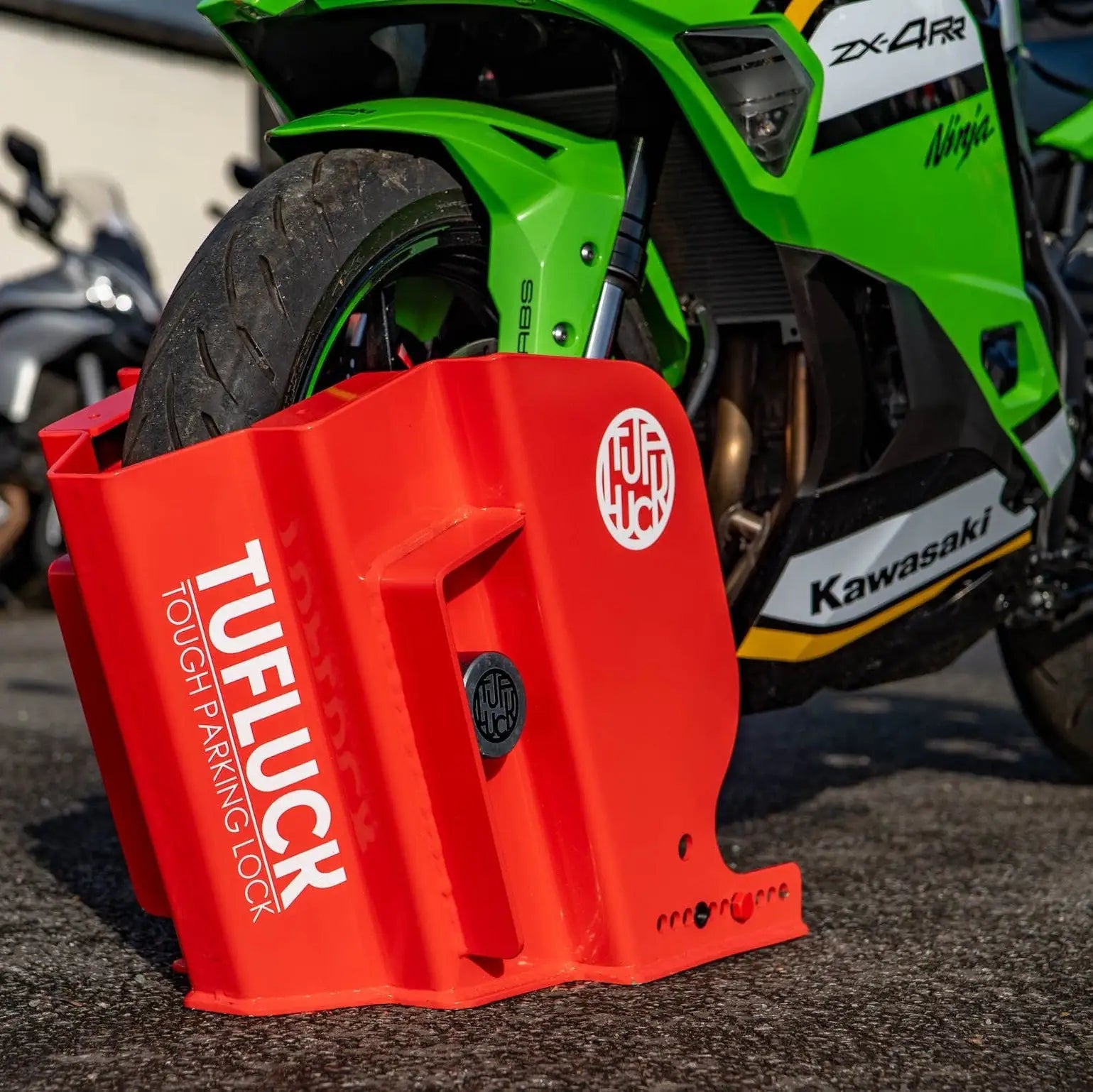
TufLuck is supplied with six M12 anchor bolts (the mounting allows up to nine). The fixing points sit beneath the wheel chock, so when a bike is locked in, the bolts are under the wheel and inside the 45 kg steel unit: they can't be seen, reached or attacked without first getting through the lock. When no bike is in it, you can reach the bolts yourself and lift the unit out, so nothing is left on the floor for a thief to prepare in advance.
- Bike locked in: bolt heads covered by the unit and the wheel.
- Bike out: the bolts are accessible to you, so TufLuck can be lifted if you're moving or need the space. See removable ground anchors.
- Fitting: bolt it to solid concrete with the anchors supplied; it's designed to be bolted, not resin-set.
In its TufLuck review (23 December 2025), Bennetts BikeSocial noted that the bolts can't be reached while the bike is locked in, but can be removed if you want to relocate it. That's what makes TufLuck the only removable ground anchor.
“Nothing is completely undefeatable, but the TufLuck comes closer than anything I’ve tested before. Once your bike’s in the TufLuck, it’s not coming out.”
John Milbank, Consumer Editor, Bennetts BikeSocial TufLuck review, 23 December 2025
Choosing a floor and drill
Whatever anchor you buy, the floor does a lot of the work. Fix into solid concrete in good condition, use a masonry bit of the size specified for the anchors, drill to the depth the anchor maker specifies and clear the dust from each hole before fitting. If your floor is block paving, asphalt or a thin screed, ask a builder about a concrete pad first.
Frequently asked questions
What bolts should I use for a ground anchor?
Use the fixings the manufacturer specifies for your floor. TufLuck is supplied with six M12 anchor bolts (the mounting allows up to nine) for solid concrete.
Resin or expansion bolts?
Resin is very strong but effectively permanent. Expansion anchors can be removed, which suits renters and anyone who expects to move, provided the bolts can't be reached once the bike is locked.
Can thieves undo ground anchor bolts?
If the heads are exposed, they can be attacked, even security heads. That's why TufLuck covers its fixings once the bike is locked in.
What size drill bit do I need?
Use the bit size given for the anchors you're fitting. For TufLuck, follow the fitting instructions supplied with the six M12 anchor bolts.
Related reading
- Removable motorcycle ground anchors: why they beat permanent ones
- Best motorcycle ground anchor UK: how to choose
- TufLuck vs traditional ground anchors
- How to secure a motorcycle: the UK rider's guide
See the TufLuck Ground Anchor & Wheel Chock: Sold Secure Diamond as a ground anchor when bolted down (SS105) and as a wheel clamp when free-standing. 6 mm folded steel, 45 kg, six M12 anchor bolts supplied, fits 15–21" front wheels with 90–128 mm tyres. £649, or three interest-free payments with Shop Pay.