Motorcycle Alarm Guide: What It Does and What to Look For
A motorcycle alarm is one of the most common bits of security riders add to a bike, and for good reason: it makes noise when someone starts tampering, and noise is the last thing a thief wants. But an alarm on its own doesn't hold a bike in place. This guide explains what a motorcycle alarm actually does, what to look for when choosing one, and how it fits alongside physical locks so your bike is genuinely harder to steal.
What does a motorcycle alarm actually do?
At its simplest, a motorcycle alarm watches for signs that the bike is being disturbed and sounds a siren when it detects them. Most alarms use a motion or tilt sensor, so lifting the bike off its stand, rocking it or trying to wheel it away should set it off. Many systems also include an immobiliser, which stops the engine from starting even if someone gets past the ignition.
Some alarms go further. Depending on the model, you might get a pager or phone app that alerts you when the alarm triggers, adjustable sensitivity so passing lorries don't set it off, and a backup battery so the alarm keeps working if a thief cuts the bike's power. Alarm and tracker combinations are also available, which add the ability to locate the bike if it does go missing.
The limits of a motorcycle alarm
It's worth being honest about what an alarm can't do. An alarm is a deterrent and a warning, not a barrier. If a determined thief is prepared to ignore the noise, an alarm won't stop them lifting the bike into a van. In a quiet street at night, or a lock-up garage away from your house, there may be nobody close enough to hear it or react in time.
False alarms are another real-world issue. A sensor that's set too sensitive can go off in wind, rain or when a cat jumps on the seat, and after a few of those, neighbours (and owners) tend to stop paying attention. That's why sensitivity settings and good installation matter as much as the alarm itself.
So the best way to think about an alarm is as one layer in a wider plan. It raises the alarm; something else needs to keep the bike where it is.
What to look for in a motorcycle alarm
If you're shopping for an alarm, these are the points worth checking:
- Insurer approval. Some insurers ask for, or give a discount for, a specific type of approved alarm or immobiliser. Check your policy or ask your insurer before buying, so you get something they actually recognise.
- Professional fitting. Wired alarms connect into your bike's electrics. A poor installation can cause battery drain or electrical faults, and insurers may require proof of professional fitting for an approved system.
- Backup battery. If the alarm has its own battery, cutting the bike's main power won't silence it.
- Adjustable sensitivity. Being able to tune the motion sensor helps avoid false alarms where you park.
- Alerts to you. A loud siren is useful, but a notification on your phone or a pager means you know about it even if you're out of earshot.
- Battery drain. Any alarm draws a little power while armed. If your bike sits for long periods, think about a battery optimiser or trickle charger.
Alarm, tracker or both?
Alarms and trackers do different jobs. An alarm tries to prevent the theft by drawing attention to it as it happens. A tracker helps you and the police find the bike afterwards. Neither one physically stops the bike being moved.
Which matters more depends on your situation. If your bike lives on the street or in a shared car park, an alarm that alerts you straight away can make a real difference. If it's an expensive or desirable model, a tracker adds a recovery option. Plenty of riders choose a combined alarm and tracker for both benefits. Whatever you choose, it's still worth pairing it with physical security.
Layering your motorbike security
Thieves tend to go for the easiest target. Every extra layer of security adds time, effort and noise to a theft, which makes your bike a less appealing option than the one down the road. A sensible setup for many UK riders looks something like this:
- Visible physical lock. A disc lock or chain that a thief can see before they even start.
- Anchoring. Securing the bike to something solid, such as a ground anchor, so it can't simply be lifted away.
- Alarm and immobiliser. To make noise and stop the engine starting.
- Tracking and marking. To improve the chances of recovery if the worst happens.
- Where you park. A locked garage, good lighting and a cover that hides the make and model all help.
The alarm covers the warning; the anchor covers the part an alarm can't, which is keeping the bike physically in place.
Where TufLuck fits in
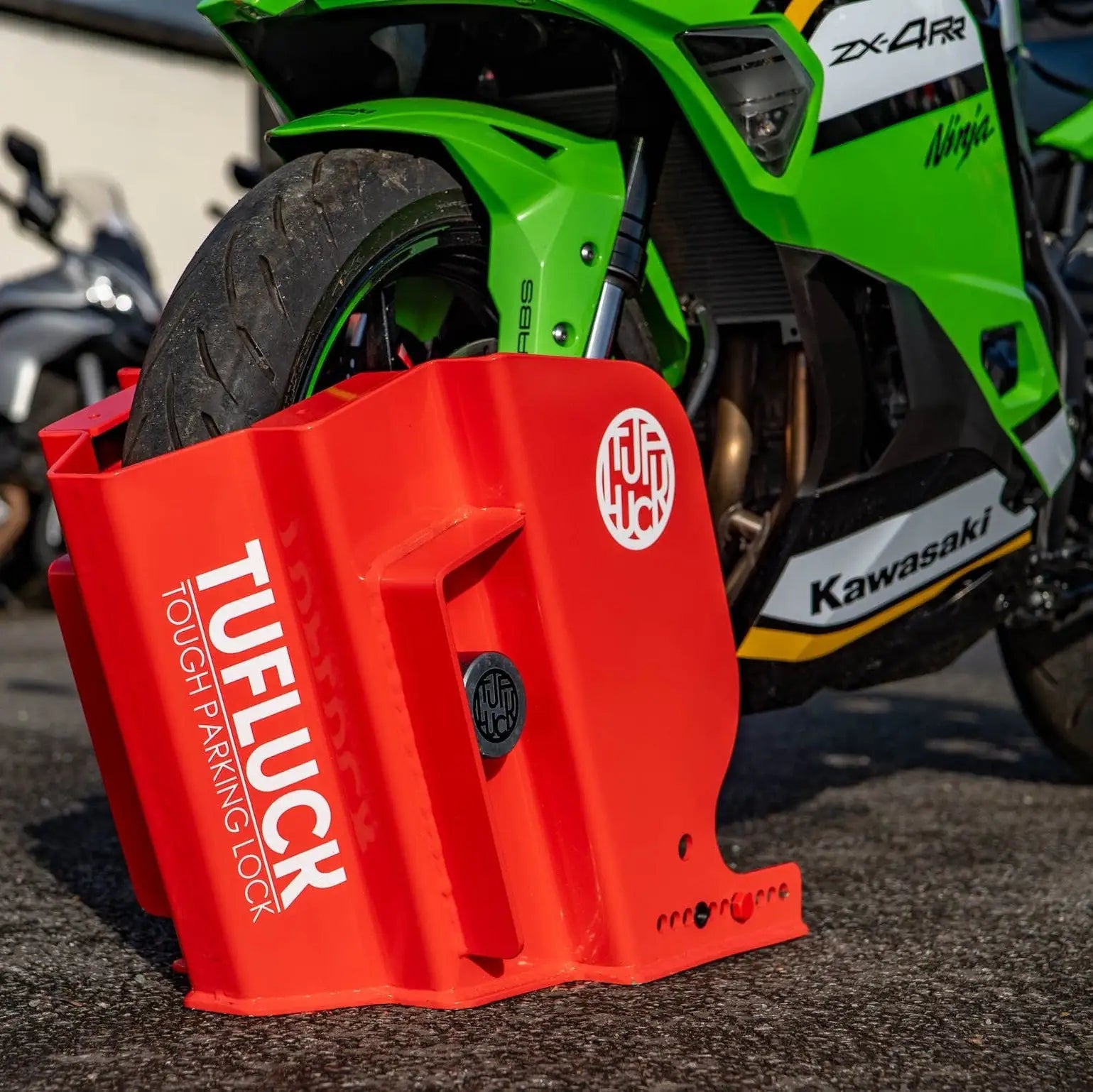
If you've got the alarm sorted and want the physical side covered too, that's what TufLuck is designed for. It's a British-made motorcycle parking lock that clamps the front wheel and holds a Sold Secure Diamond rating both as a bolted ground anchor and as a free-standing wheel clamp. It's also removable, so it can come with you if you move house, and it fits a wide range of bikes with 15–21 inch front wheels and 90–128mm tyres.
Paired with a good motorcycle alarm, it gives you both halves of the job: something to raise the alarm, and something solid that keeps the bike where you left it.
The bottom line
A motorcycle alarm is a worthwhile addition for most riders, especially if your bike is parked where people might hear it. Choose one your insurer recognises, get it fitted properly and set the sensitivity sensibly. Just don't rely on it alone. Combine it with a solid lock and an anchor, and you'll give thieves plenty of reasons to move on.