Waterproof Motorcycle Cover Guide: What to Look For This Winter
A good waterproof motorcycle cover is one of the cheapest ways to look after your bike through a British winter. It keeps rain, road grime, bird droppings and frost off the paintwork, and it stops passers-by seeing exactly what's parked on your drive. But not every cover that says "waterproof" on the packet will do the job well, and a cover on its own won't stop a determined thief. This guide covers what to look for, how to use one properly, and how to pair it with real security.
Why a waterproof motorcycle cover is worth having
If your bike lives outside, or in a damp garage or shared car park, a cover does three useful things:
- Protects the finish. Rain, salt spray carried on the wind, tree sap and droppings all take their toll on paint, chrome and seats over time.
- Keeps the bike drier. Less water sitting on switchgear, electrics and chains means less corrosion and fewer winter niggles.
- Hides the bike. A covered motorcycle is anonymous. Someone walking past can't easily tell whether it's a tired commuter or a high-value machine, which makes it a less obvious target.
Waterproof vs breathable: why you want both
A fully sealed, non-breathable cover can trap moisture underneath. When temperatures drop overnight, condensation forms on the inside and can sit against the bike for days. That's the opposite of what you want.
Look for a cover described as both waterproof and breathable, or one with built-in vents. Vents let damp air escape while the outer fabric keeps rain off. Taped or sealed seams are also worth having, as stitched seams are often where water first gets through.
What to look for when choosing a cover
The right size
Too small and it won't reach the bottom of the wheels; too big and it will flap in the wind, rubbing the paint and acting like a sail. Most manufacturers publish a size guide based on bike length and type, and many list whether the cover allows for a top box or a tall screen. Measure your bike with any luggage fitted before you buy.
Heat-resistant panels
Exhausts stay hot for a while after a ride. Many covers include a heat-resistant panel around the silencer area, but it's still sensible to let the bike cool before covering it. A melted patch is a quick way to ruin a new cover.
A secure fit
Wind is the enemy of an outdoor cover. Useful features include an elasticated hem, an underbelly strap that clips beneath the bike, and buckles or drawcords to keep it snug. A loose cover can blow off overnight, or rub against the bodywork until it marks it.
Lock holes
Reinforced holes or eyelets near the wheels let you thread a chain or lock through the cover. As well as stopping someone simply lifting the cover off and walking away with it, this lets you keep your bike locked while it's covered, which is exactly how it should be.
Indoor or outdoor use
Indoor covers are usually lighter and softer, designed mainly to keep dust off. If your bike lives outside, choose a heavier outdoor cover. If it lives in a garage, a lighter breathable cover is often better than a heavy waterproof one, as it lets the bike breathe in a sheltered space.
How to use a cover properly
- Let the bike cool. As above, give the exhaust time to cool before you cover up.
- Clean and dry the bike first where you can. Covering a wet, salty bike traps that moisture and grime underneath.
- Lock up first, cover second. Fit your lock or chain, then put the cover on and pass the lock through the eyelets if it has them.
- Lift it off occasionally. If the bike is stored for weeks over winter, take the cover off now and then on a dry day to air it and check for any damp.
- Store the cover dry. Folding a soaking cover into its bag can leave it smelling musty and encourage mould.
A cover is not a lock
A waterproof motorcycle cover helps keep a bike out of sight, but it doesn't stop anyone who has already decided to take it. Thieves can lift a cover in seconds to see what's underneath. That's why a cover works best as one layer of security, sitting on top of a proper lock that's fixed to something solid.
For bikes kept at home, the strongest setup is usually a ground anchor or wheel clamp that attaches the bike to the ground, plus a cover to keep it hidden and protected from the weather. Visible security can also put thieves off, so some riders choose to leave a corner of the cover lifted to show the lock.
Pairing your cover with TufLuck
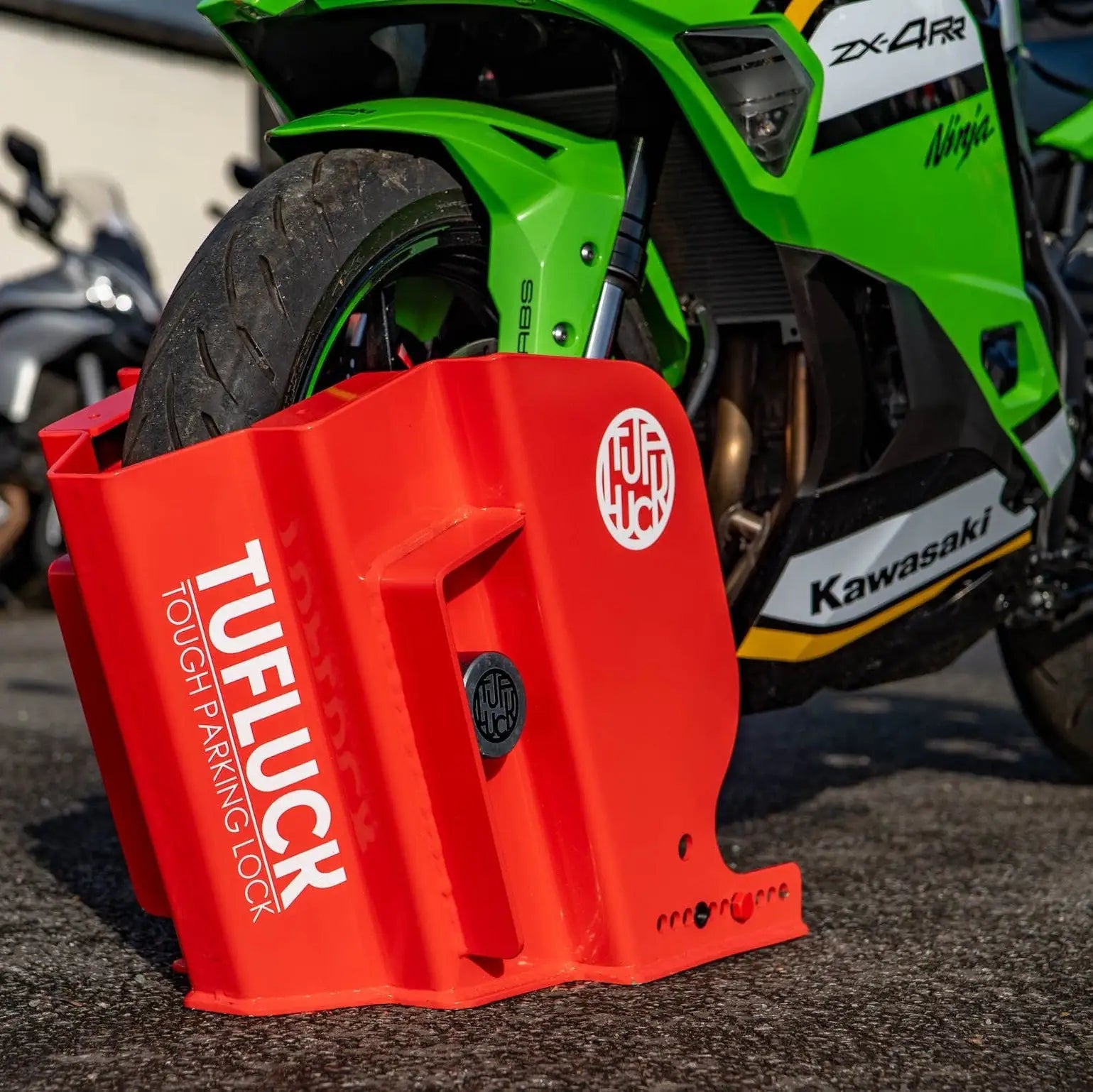
If you're looking for the lock to go under the cover, TufLuck is a British-made motorcycle parking lock that holds the front wheel and is Sold Secure Diamond rated both as a bolted ground anchor and as a free-standing wheel clamp. It's universal, so it suits a wide range of bikes, and it's removable, so it can come with you if you move house. Lock the bike into TufLuck, put a breathable waterproof cover over the top, and you've dealt with both the weather and the thieves.
Quick checklist
- Waterproof outer fabric with taped seams
- Breathable fabric or vents to reduce condensation
- Heat-resistant panel near the exhaust
- Correct size for your bike, including any luggage or tall screen
- Elasticated hem and underbelly strap for windy nights
- Reinforced lock holes so you can lock through the cover
- A proper lock underneath, fixed to something solid
Get those right and your bike should come out of winter cleaner, drier and still exactly where you left it.