Removable Motorcycle Ground Anchor: Why It Beats a Permanent One
Yes, a motorcycle ground anchor can be removable without being weak. If the anchor is bolted to the floor rather than set in resin, and its fixing bolts are covered once the bike is locked in, you get fixed-anchor security while the bike is parked and an anchor you can take with you when you move.
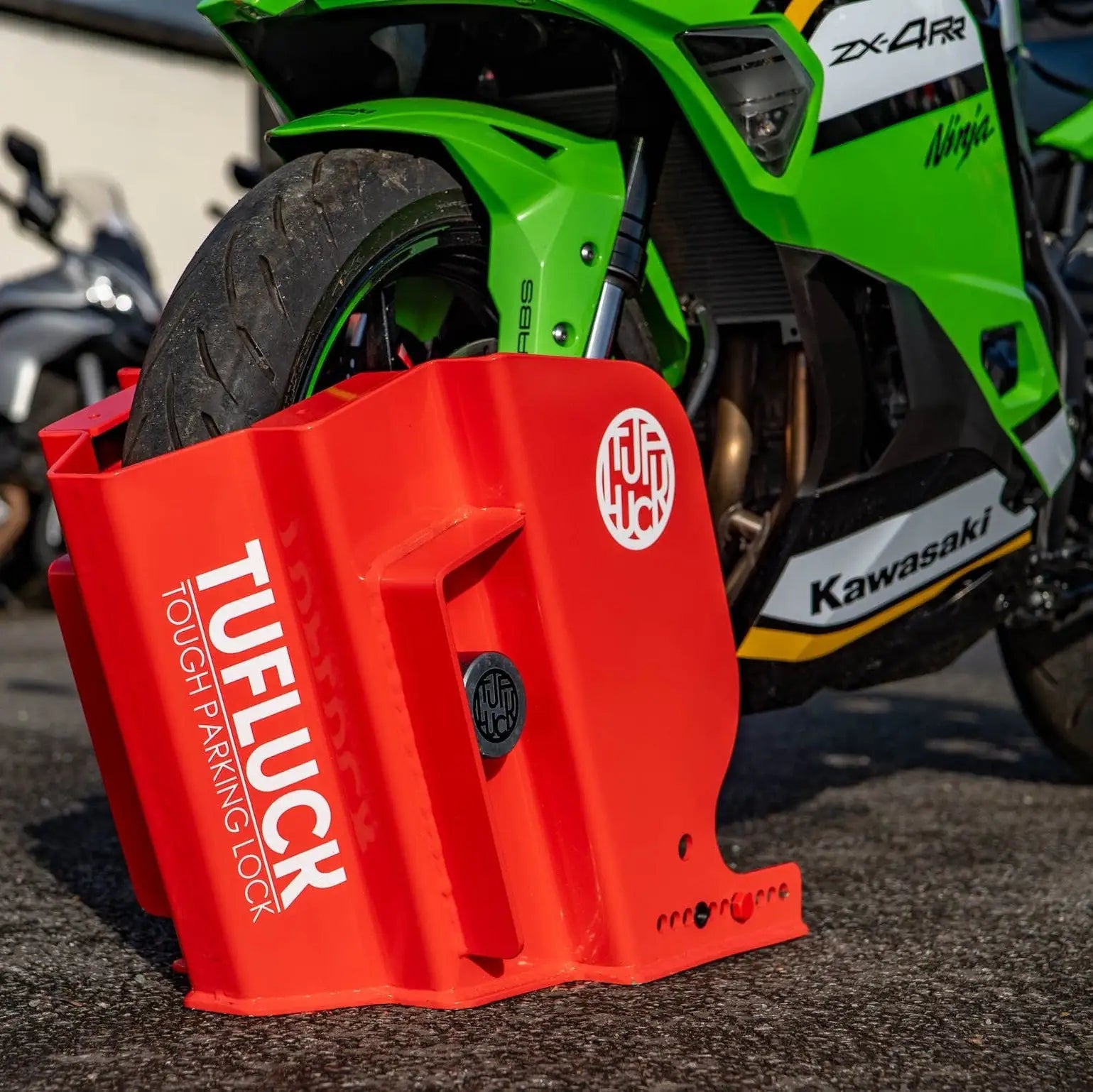
TufLuck is the only removable ground anchor. It bolts to the floor with six M12 anchor bolts (the mounting allows up to nine), and the bolts can be taken out if you want to move it, but they can't be reached while a bike is locked in.
Most ground anchors are a permanent commitment. A hole is drilled into the concrete, a steel ring or lug is fixed in place with resin, and the anchor stays there whether you need it or not. For some riders that's fine. For renters, people who expect to move, or anyone who shares a garage, it causes problems that are easy to overlook before you buy and frustrating afterwards. This guide explains the difference, how a removable anchor is fitted, and who it suits.
The problem with permanent ground anchors
The obvious issue is what happens when you sell the property, move house or change how the garage is used. A resin-fixed anchor is designed not to come out. That's good for security and inconvenient for everything else: removing one usually means grinding it out, which damages the anchor beyond reuse and leaves a void in the floor to repair. Many riders simply leave theirs behind.
It's also a problem for renters. If you rent a garage or parking space you almost certainly can't make permanent changes to the floor, and leaving a steel ring set in someone else's concrete can cost you your deposit.
Then there's the ring itself. Most floor anchors leave a steel fixture on the floor when they're not in use. Fold-flat designs reduce the trip hazard, but even flush ones catch tyres, tools and feet when you're working in the garage.
Resin vs bolt-down vs wall anchors
| Resin-set floor anchor | Bolt-down anchor (exposed bolts) | TufLuck (bolt-down, bolts covered when locked) | |
|---|---|---|---|
| Can you remove it? | Not without grinding it out | Yes | Yes |
| Fixing points visible to a thief? | No | Yes, around the base | No, they sit under the wheel and body once locked |
| Needs a chain and padlock? | Yes | Yes | No, the lock is built in |
| Suitable for renters? | Rarely | Sometimes | More often (bolt holes can be filled when you leave) |
| Holds the bike upright? | No | No | Yes, it's also a wheel chock |
Why you don't have to trade security for flexibility
There's an assumption built into most anchor designs: that you choose between serious security (permanent) and flexibility (removable). That made sense when an anchor was just a steel ring. It stops making sense when you look at what the anchor is for.
An anchor's job is to secure the motorcycle while it's parked, not to modify your floor forever. The fixing bolts are a means to an end: they stop the anchor being lifted or levered out under attack. If the anchor uses high-tensile bolts instead of resin, and the design keeps those bolts out of reach while the bike is locked in, it can be taken up when you don't need it and refitted when you do. The floor keeps a few bolt holes, which are easy to fill.
For renters and house moves
Riders who don't have a ground anchor usually give one of two reasons: they don't want to modify a floor they don't own, or they expect to move within a few years. A bolt-down anchor answers both. Bolt holes are ordinary fixings rather than a resin installation, and when TufLuck comes up, the holes can be plugged with filler or a cement plug.
Check your tenancy agreement and talk to your landlord before drilling. It's a much easier conversation about a few M12 fixings than about a resin-set steel ring that will stay in the floor.
If you own your garage but expect to move in the next few years, removability also changes the cost. A permanent anchor is a cost you pay again at every address. A removable one moves with you.
How TufLuck fits to the floor
TufLuck is supplied with six M12 anchor bolts (the mounting allows up to nine) and is bolted to a solid concrete floor. The fixing points sit beneath the wheel chock, so when a motorcycle is in the chock and the unit is locked, the bolts are under the wheel and inside the body: a thief can't see or reach them. When the bike is out, you can reach them, so you can lift the unit if you move or need the floor space.
- Choose the spot: allow room to ride or push the bike straight in, and check the floor is solid concrete.
- Mark the holes using the unit as a template.
- Drill with a masonry bit sized for the six M12 anchor bolts supplied, and clear the dust from each hole.
- Fit the anchors, position TufLuck and tighten the bolts.
- Ride or wheel the bike into the chock, push the 25 mm hardened pin through and close the hidden-shackle padlock.
TufLuck weighs 45 kg and is built from 6 mm folded steel. One person can position it, but two makes it easier.
The wheel chock: stability before you lock
TufLuck is also a front wheel chock. As soon as the wheel is in the cradle the bike stands upright on its own, so it can't roll or topple before you lock it. That's useful in a garage shared with a car, tools or other bikes, and if your bike has no centre stand.
The cradle takes front wheels from 15 to 21 inches and tyres from 90 to 128 mm wide. Some wide-tyred cruisers and tourers need a special version; see the fitment guide before you buy. When it's locked, the padlock and its shackle sit inside the body of the unit: there's no exposed shackle and no chain to cut.
Who a removable ground anchor suits
- You rent your garage or parking space
- You expect to move and want security that moves with you
- You share a garage and sometimes need the floor clear
- You ride more than one bike and want one anchor that fits them all
- You want Sold Secure Diamond security without a permanent concrete installation
Bolted down, TufLuck holds Sold Secure Diamond under SS105, the Sold Secure specification for ground anchors and security posts. Used free-standing, it is also rated Sold Secure Diamond as a wheel clamp. Sold Secure's published scheme describes SS105 Diamond as tested with tool lists A, B and C in full plus parts of lists D and S (specialist tools). You can check any product's rating and category yourself at soldsecure.com. For what that rating means and how it compares with Powered Cycle Diamond, read our Sold Secure Diamond guide.
Independent test: Bennetts BikeSocial
Bennetts BikeSocial consumer editor John Milbank put TufLuck through his destruction tests for a review published on 23 December 2025. These were the results:
| Attack | Result |
|---|---|
| Drill | Pass |
| Sledgehammer | Pass |
| Reciprocating saw | Pass |
| Angle grinder | Pass (exceptional) |
With the angle grinder, he gave up. He called TufLuck “the first device that – even with ideal conditions – I gave up trying to defeat”. The review found that:
- the 25 mm case-hardened locking pin can't be reached with an angle grinder once the bike is in place
- the body covers the wheel and lower forks, so the wheel can't be unbolted to free the bike
- the floor bolts can't be reached while it's locked, but can be removed if you want to relocate it
“Nothing is completely undefeatable, but the TufLuck comes closer than anything I’ve tested before. Once your bike’s in the TufLuck, it’s not coming out.”
John Milbank, Consumer Editor, Bennetts BikeSocial TufLuck review, 23 December 2025
TufLuck was designed by Kalman Kozomos, who also created the Squire Atilla, the first Sold Secure Diamond motorcycle disc lock. Bennetts tested a late pre-production unit; the specifications in this article are for the retail version.
Frequently asked questions
Can I fit a ground anchor in a rented garage?
Often, but get your landlord's permission first. A bolt-down anchor like TufLuck leaves only small fixing holes that can be filled when you leave, which is usually easier to agree than a resin installation.
Is a removable ground anchor less secure than a resin one?
Not if the fixings can't be reached while the bike is locked. TufLuck's bolts sit under the wheel and body once it's locked, so a thief has to defeat the unit itself rather than its fixings.
What floor do I need?
A solid concrete floor in good condition. Block paving, asphalt or a thin screed may not hold the fixings properly; if in doubt, ask a builder to check before you drill.
What happens to the holes when I move?
Lift TufLuck, then fill the holes with cement or a suitable filler. At the new address you bolt it down again.
Does the chock hold the bike up when it isn't locked?
Yes. The chock holds the bike upright on its own, so you can park in it every day and lock it when you leave the bike.
Related reading
- Ground anchor security bolts explained
- Best motorcycle ground anchor UK: how to choose
- Will TufLuck fit my bike?
- Sold Secure Diamond ground anchors: SS105 vs SS101
- Motorcycle garage security checklist
See the TufLuck Ground Anchor & Wheel Chock: Sold Secure Diamond as a ground anchor when bolted down (SS105) and as a wheel clamp when free-standing. 6 mm folded steel, 45 kg, six M12 anchor bolts supplied, fits 15–21" front wheels with 90–128 mm tyres. £649, or three interest-free payments with Shop Pay.